Maggie L
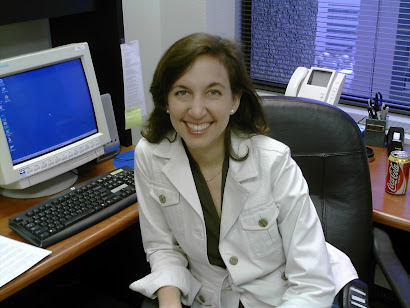
One of the rare times I'm in the office
Showing posts with label twitter. Show all posts
Showing posts with label twitter. Show all posts
Tuesday, September 11, 2012
Building a Brand Using Social Media
You've heard of singers or bands being discovered or popularized via YouTube. I ran across an interesting article at the Nieman Journalism Lab about a student photographer who's making a name for himself via Flickr's Creative Commons. He's not a journalism major-- he just started taking pictures of politicians. The article says his photos may have been used more than a million times online.
I remember reading another article about how a wedding photographer built their (now big) business using Facebook-- they'd take pictures at a wedding and then tag participants (who would then tag other people in the photos).
Finally... KOMO is using twitter hashtags during its news to connect with viewers. They're also using it during programming. A press release describes their effort- something you could steal for your newscast?


Friday, August 24, 2012
Lead? What Lead?
I received an email from a producer concerned about a new nightside gig where it seemed like producers, not reporters, were expected to come up with the lead every night.
It's always easier for someone in the field to come up with good story ideas... but that said, it takes a village, and sometimes producers have a better-- big picture sense-- than field crews. By nighttime... the day's news has unfolded and there's generally something obvious. It's how you treat that lead that can really make a difference. Are you just phoning it in and tossing to a reporter pkg or are you thinking of interesting /creative ways to showcase your first story?
In terms of staying on top of news, I think the easiest way is twitter lists. I have a list for every area I cover and I put papers, TV, cop shops, anything from that area on the list. You can do the same in your market. You could do lists by area or by beat or both. You'd be amazed the little things you can come up with that might get you through a slow day or even just add a little interesting vo here or there that separates you from the competition.
You don't always have to lead with a pkg. Has something intersting happened since the 6pm that can be an anchor vosot-- but with bigger "lead treatment" (graphics, set up etc)? Use it first and then go to the reporter pkg that's been out there all day. Also understand with social media, people have already probably seen your lead so what is your story bringing to the party? Hopefully context... and something fresh.
If there's nothing obvious with which to lead... you can always try to localize big national stories. So today there was the shooting near Empire State Building. Can you do a workplace shooting folo locally? Also news from Aurora shooting that you could use to get in or out of it. How about hurricane stuff-- any impact on your area? People headed to RNC convention worried about it etc? Local Red Cross or utilities folks keeping an eye on it? I also like a lead to be a talker-- something that people go-- what, wait, are you kidding me?
If you are new to the market, or even if you've been there a while, I think it's good for show producers to check in-- face to face-- with various PIOS around the city. Get a ridealong with cops and fire. Take a lunch with a councilperson's PR guy. Contact the local university public affairs person. When you talk to them, leave it open. Ask them what's important that maybe doesn't grab headlines? What do they find interesting that's outside their area of concern? What's their connection to the city? This is a great way to make contacts but also a good way to give you a sense of the city. It's also nice to call on PIOs when you don't need something RIGHT NOW!
Finally, when in doubt, you can always lead with weather.
A Little joke.
But maybe not.
Wednesday, August 22, 2012
Words Match Graphics
Please make sure your words match the graphics you have. I like to take graphic requests directly from the script so that it matches the graphic exactly. It's much easier for viewers to understand. You don't want a viewer being distracted from your story or show because they're trying to read a graphic that isn't matched to what's being said. Ditto if you have any kind of print on the screen-- read it verbatim. This is especially important when referencing Twitter and Facebook pages.
Thursday, September 2, 2010
Hostage Situation and Twitter
Hey in case you didn't see it, there's a nice article in the Washington Post on how Twitter broke most of the news in the hostage situation in Maryland yesterday. There was a lot of stuff there, pics and links that was out way ahead of the rest of the media. Monitor Twitter, but proceed with caution. Don't use anything until you get it confirmed yourself. You can use the information to shoot you in the right direction but be careful about letting it replace your own reporting.
Friday, February 13, 2009
Twitter and Skype
I know you are tired of hearing me preach Twitter.com and Skype.com but the Buffalo plane crash provides a good example of how you can use both to enhance your coverage.
Twitter is micro-blogging-- basically like the status bar on Facebook. You enter a sentence and it's posted. You also "follow" other Twitter users to see what they are saying. The more people you follow, the better depth and breadth you get. Sometimes you get a sense of what people are talking about before it hits anybody's radar screen.
For spot news coverage, use Twitter's search function... http://tinyurl.com/acpp6u
On big stories, like the Buffalo plane crash, people may use hashtags (#) to make it easier to search for a certain story. The hashtags I've seen used for the crash are #buffalo, #3407, and #clarenceplanecrash. You can find out what hashtags people are using at www.hashtags.org
You won't use things directly for air from Twitter.com, but it can give you a sense whether you're missing something. For example, people started posting home video of the crash, the tower recordings, and a Google pic of the house prior to the crash. Did you know about these? How quickly? What if that plane crash were in your backyard and you were going wall to wall?
You can also use Twitter to search for users in a given area and follow their "tweets" or updates. I use this a lot during storm coverage. People are really good about reporting what's happening in their area. Again, it's not something you'd put directly on air necessarily but it can give you a better sense of what's happening.
Skype is the videophone over the internet service that's free between users. You can also search Skype for users in a given area. For the Buffalo crash, you could call users in Buffalo. Maybe they're no where near the crash, but who knows? You might get lucky. Same goes for storm coverage. If you're wondering if it's hailing in Arlington, Texas, you can call a Skype user in Arlington and check. Instead of a phoner, you'd have a live picture of a person. Maybe they could even take their laptop out to the back deck and show you the golf-ball sized hail.
Twitter is micro-blogging-- basically like the status bar on Facebook. You enter a sentence and it's posted. You also "follow" other Twitter users to see what they are saying. The more people you follow, the better depth and breadth you get. Sometimes you get a sense of what people are talking about before it hits anybody's radar screen.
For spot news coverage, use Twitter's search function... http://tinyurl.com/acpp6u
On big stories, like the Buffalo plane crash, people may use hashtags (#) to make it easier to search for a certain story. The hashtags I've seen used for the crash are #buffalo, #3407, and #clarenceplanecrash. You can find out what hashtags people are using at www.hashtags.org
You won't use things directly for air from Twitter.com, but it can give you a sense whether you're missing something. For example, people started posting home video of the crash, the tower recordings, and a Google pic of the house prior to the crash. Did you know about these? How quickly? What if that plane crash were in your backyard and you were going wall to wall?
You can also use Twitter to search for users in a given area and follow their "tweets" or updates. I use this a lot during storm coverage. People are really good about reporting what's happening in their area. Again, it's not something you'd put directly on air necessarily but it can give you a better sense of what's happening.
Skype is the videophone over the internet service that's free between users. You can also search Skype for users in a given area. For the Buffalo crash, you could call users in Buffalo. Maybe they're no where near the crash, but who knows? You might get lucky. Same goes for storm coverage. If you're wondering if it's hailing in Arlington, Texas, you can call a Skype user in Arlington and check. Instead of a phoner, you'd have a live picture of a person. Maybe they could even take their laptop out to the back deck and show you the golf-ball sized hail.
Wednesday, January 28, 2009
Weather Coverage & the Web
Al Tompkins with Poynter did a nice piece today on how an Oklahoma newspaper used the web during its coverage of the storm. None of these items are very big ticket-- you could try some of them in your day to day ops so that for your next storm or spot news... you'll be ready. Coverage on the web can drive traffic to your show and vice-versa. Plus, it's cool.
Here's the article:
http://tinyurl.com/c6xoag
Here's the article:
http://tinyurl.com/c6xoag
Thursday, October 16, 2008
Interesting Article on Blogs
Found this on Twitter from the Knight Digital Media Center:
http://snurl.com/4eu49
http://snurl.com/4eu49
Tuesday, September 16, 2008
Preaching Twitter. Again
Here's an interesting article on how the Austin-Statesman used Twitter to cover Ike. Something any station could do.
Statesman team uses Twitter to cover Hurricane Ike
Posted using ShareThis
I also used Twitter during Gustav and Ike. I went to summize.com and found users in the New Orleans and Houston area. I followed them so I could get a sense of what they were experiencing and what was important to them. I also followed the local newspapers and tv stations in the area to make sure we weren't missing anything.
Statesman team uses Twitter to cover Hurricane Ike
Posted using ShareThis
I also used Twitter during Gustav and Ike. I went to summize.com and found users in the New Orleans and Houston area. I followed them so I could get a sense of what they were experiencing and what was important to them. I also followed the local newspapers and tv stations in the area to make sure we weren't missing anything.
Saturday, August 16, 2008
More on Twitter
Sorry to bombard you with blogs about Twitter, but it's my current obsession. Here's how the Chicago Tribune used it to cover breaking news, according to Poynter:
http://www.poynter.org/column.asp?id=31&aid=148745
http://twitter.com/coloneltribune
http://www.poynter.org/column.asp?id=31&aid=148745
http://twitter.com/coloneltribune
Tuesday, August 12, 2008
So I'm on Twitter. I blog for my network, but often short updates like-- "17 people now dead in bus crash" aren't worth a whole blog but is worth something. Enter Twitter. It's like a headline service for your life. You can blackberry or text. Here's an interesting article on it...
http://www.kcnn.org/modules/twitter_tips
http://www.kcnn.org/modules/twitter_tips
Monday, July 28, 2008
Using the Web
I was out covering Hurricane Dolly and found the Red Cross using Flickr and a blog to get out the latest information. I thought it was interesting, especially since you can do updates via blackberry (I do a lot of Pitlist entries on my blackberry). Theoretically, a PIO could update the page from the field. Here are the links:
http://hurricanedolly.wordpress.com/
http://www.flickr.com/photos/americanredcross/2704694941/
If your station doesn't have a huge web staff (or even if it does), this may be something to think about in breaking news situations. If you have something like this set up so that reporters and photogs can send in stuff--- it may be a real advantage. If they are too busy, consider sending out a young hungry tech-savvy intern who can help with this end of things.
Some stations are also using Twitter to put out updates.
http://twitter.com/kpbsnews
This particular station also used a web mapping application for the San Diego wildfires last year-- to show viewers exactly where wildfires and shelters were. If you're in a hurricane prone area, you could do the same thing-- to show evacuation routes, shelter, position of hurricane etc.
If you're in the 20-30 age bracket, you're in a unique position to help your station use the web and interconnect with viewers. Many of your station managers don't use technology in the same ways that you and your friends do. Things that might seem like obvious applications to you may not even occur to newsroom leaders. Speak up and give suggestions. They're important to your station's survival!
http://hurricanedolly.wordpress.com/
http://www.flickr.com/photos/americanredcross/2704694941/
If your station doesn't have a huge web staff (or even if it does), this may be something to think about in breaking news situations. If you have something like this set up so that reporters and photogs can send in stuff--- it may be a real advantage. If they are too busy, consider sending out a young hungry tech-savvy intern who can help with this end of things.
Some stations are also using Twitter to put out updates.
http://twitter.com/kpbsnews
This particular station also used a web mapping application for the San Diego wildfires last year-- to show viewers exactly where wildfires and shelters were. If you're in a hurricane prone area, you could do the same thing-- to show evacuation routes, shelter, position of hurricane etc.
If you're in the 20-30 age bracket, you're in a unique position to help your station use the web and interconnect with viewers. Many of your station managers don't use technology in the same ways that you and your friends do. Things that might seem like obvious applications to you may not even occur to newsroom leaders. Speak up and give suggestions. They're important to your station's survival!
Subscribe to:
Posts (Atom)

